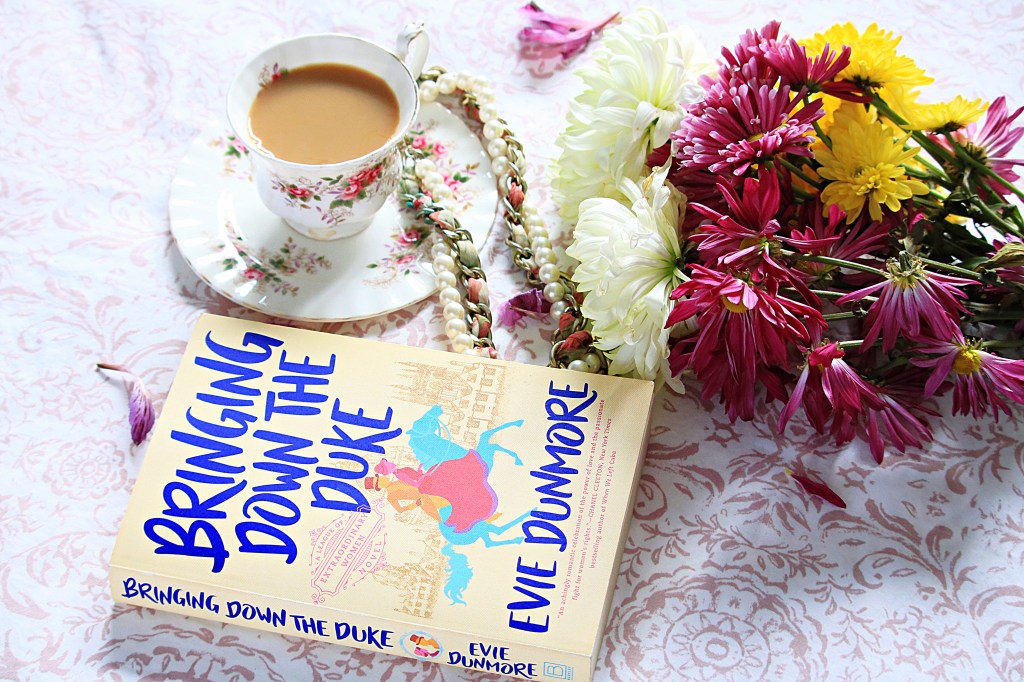
Synopsis
Annabelle Archerโs greatest fear is to remain in Chorleywood, England as a domestic servant to her cousin, without ever pursuing her dreams. However, when Oxford University opened its doors to women, Annabelle knew this was a chance of a lifetime she couldnโt afford to miss. To support her education, Annabelle secures a scholarship by becoming a member of the National Society for Womenโs Suffrage where she is required to champion their cause for womenโs right to vote, and target influential men in the hopes of gaining sponsors for their cause. Her first assignment with the suffragists was to sway the opinion of Englandโs most prominent political chief strategist himself: the unfriendly Duke of Montgomery. While Annabelle prepares a trojan horse-like plan against the duke, she struggles with avoiding scandalous situations which can not only jeopardize her dreams, but also her reputation.ย
In a time where womenโs rights were extremely limited or passed over to their husbands once married, Evie Dunmore introduces readers to Annabelle Archer who not only challenges womenโs placement in the Victorian era but also tackles several barbaric ideologies about women’s contribution to society during that period. Dunmore uses Annabelle Archer to debunk the notion that higher education would harm a womanโs health. First, Dunmore uses an object to outline how bizarre this belief was at the time. Right at the beginning of the book, Annabelle contemplates how she plans on approaching her cousin about letting her attend Oxford. For a slight second, Annabelle was distracted by the sight of her fatherโs old desk which was passed down to her cousin, and not to her after her father died. Many readers mightโve missed the significance of this, but hereโs the sad point that was made: women were not allowed to own a desk because it was believed to ruin their health. Next, Dunmore displays Annabelleโs own intelligence to disprove this notion of โbad health.โ Before giving his approval, Annabelleโs cousin responded with the most foolish explanation about pursuing higher education, โ. . . but you already know more Greek and Latin than is necessary, . . . [a]nd โtis well known that too much education derails the female brain . . .โ. Annabelle knew more than just Greek and Latin; she often references John Stuart Miller and Sappho; she studied Voltaire, Rousseau, and Locke; and is knowledgeable about the history of both the Phoenicians and Greek. Annabelle was beyond intelligent before attending Oxford. Sheโs so smart that the Duke of Montgomery often referred to her as โbluestockingโ. Dunmore utilizes Annabelle in two important ways: to expose the false idea that higher education harms women and to educate readers on how society in the past belittled educated women.

Dunmore didnโt solely focus on womenโs limitations during the Victorian era. She did something that often gets ignored in fiction novels: she shed light on the rules of aristocracy society but from the male perspective. In most historical fiction novels, readers are thrust into a world where womenโs suffrage is usually on display. Rarely do we get an understanding of the limitations regarding aristocracy. Well, Dunmore presents Sebastian Devereux, the nineteenth Duke of Montgomery, who is forced to make a crucial decision on conforming to social standards or risk everything in the name of love. In this dual perspective narrative, Sebastian is focused on retrieving his family castle that his father lost in a card game. Yet, he is spellbound by Annabelleโs beauty and her intellectual mind. Sebastian finds himself grappling with his feelings for Annabelle and the question of whether or not heโs prepared to forfeit his social standing for her. To get a sense of the monumental pressure, Sebastian explains the consequences in this way: โI can give you everything, everything except that and you know it. . . . It would ruin my brother. It would taint my children. I would lose my allies. My standing, the Montgomery nameโwhat sort of man would I be?โ Here, Dunmore spotlights the double standard within the Victorian social class. While women were often encouraged to secure an advantageous marriage, a nobleman will not only lose everything if he marries below his station, but his decision will also affect any children that are born from the union.
Considering all of these aspects, I thoroughly enjoyed this book. Dunmore exposes the inner lives of both Annabelle and Sebastian while allowing her readers to experience a more complex truth about the Victorian era. The captivating romance in this novel slightly echoes that of the epic chemistry in Pride and Prejudice, but with a deeper yearning for self-worth and social freedom. An awe-inspiring story worth the read!
Happy Reading!